Sleep after 60
Asleep at Eleven, Wide Awake at Four? What Those Missing Hours Are Doing to Your Health, and What Scientists Discovered When They Warmed Older Sleepers by Less Than Half a Degree
By the Quietvana team · 4 November 2026 · 8 min read

Falling asleep has never been your difficulty. You're usually out by eleven, sometimes earlier, and for a few hours the night goes exactly the way it should.
Then, at around four o'clock, something switches on. There's no dream and no noise to blame, only the sudden, unmistakable sense of being completely awake, as though someone had turned the lights on inside your head.
You lie still so you won't disturb anyone, quietly calculating how much sleep you could still get if you drifted off now. Two hours becomes an hour and a half, and by half past four you've given up and gone downstairs to start the coffee.
You've probably told yourself it's simply part of growing older, and your doctor may well have said the same. It isn't, and the longer the pattern continues, the more it quietly costs you, so it's worth understanding properly.
Five hours a night adds up to a month of missing sleep every year

The first thing most people are never told is that your need for sleep doesn't shrink with age. The CDC recommends seven to eight hours a night for adults 65 and older, which is essentially the same amount it recommends for everyone else.
If you're asleep by eleven and awake by four, then, you aren't getting some gentler, older version of a normal night. You're getting about five hours, which leaves you two to three hours short every single night. Those missing hours don't just leave you tired: year after year, they're linked to memory loss, dementia, heart disease and falls.
Why "it's just your age" is the most expensive advice you've ever accepted

The Mayo Clinic lists waking up too early as a symptom of insomnia rather than as a normal feature of aging. The cruel irony is that because it's so common, it rarely gets taken seriously. In one study of more than 9,000 people over 65, more than half reported a sleep complaint most of the time, so it gets filed away under "old age" while the people living with it are left to manage on their own.
Yet there are real, physical reasons it becomes more common after 55, and none of them have anything to do with willpower:
- Your body clock moves earlier. The internal timer that decides when your body starts its morning shifts forward with age, so it may be calling the start of the day before the birds are even awake.
- Your sleep becomes lighter. Older adults spend more of the night in the lighter stages of sleep and less in deep sleep, the heavy, dreamless stage that normally carries you through until morning. With less of it in reserve, something as small as the furnace switching on can end the night.
- Your body produces less melatonin, the hormone that rises in the dark and helps sustain sleep once you've drifted off.
What those missing hours may be doing while you lie awake

You may have noticed the early signs already: the name that won't come, or the moment you walk into the kitchen and can't remember why. It's easy to blame your age for that too, but it's worth asking whether the real culprit is the nights.
- Your memory. Researchers at University College London followed nearly 8,000 adults for 25 years and discovered that those who consistently slept six hours or less through their 50s, 60s and 70s were approximately 30% more likely to develop dementia.
- Your memory, again. In a study of Americans over 65, people who slept five hours or less were approximately twice as likely to develop dementia over the following five years as those who slept seven to eight.
- Your thinking. Among nearly 9,000 adults over 50, short sleep was associated with a faster decline in memory and thinking over ten years, and staying physically active didn't cancel out the effect.
Your heart, your balance, and the people counting on you

It isn't only your memory. Year after year, the same short nights show up in the rest of your body too:
- Your heart. When researchers pooled studies covering almost half a million people, short sleep was associated with a 48% higher risk of developing or dying from coronary heart disease.
- Your balance. Women in their 80s whose sleep was measured with a wrist monitor were approximately 50% more likely to fall repeatedly the following year if they slept five hours or less.
- Your overall health. People who slept five hours or less at age 50 were 30% more likely to go on to develop two or more long-term illnesses.
- Your blood sugar and your mood. Short sleep has also been linked with a higher risk of type 2 diabetes, and long-running insomnia with roughly double the odds of later low mood.
Taken together, this is about far more than tiredness. It's about whether you'll still be the one collecting your grandchildren from school in ten years, whether you'll remember their names at their weddings, and whether you'll be there at all.
Everything you've already tried, and why none of it lasted

If you're reading this, you almost certainly haven't just lain there and accepted it. Most people in your position have tried some version of the following:
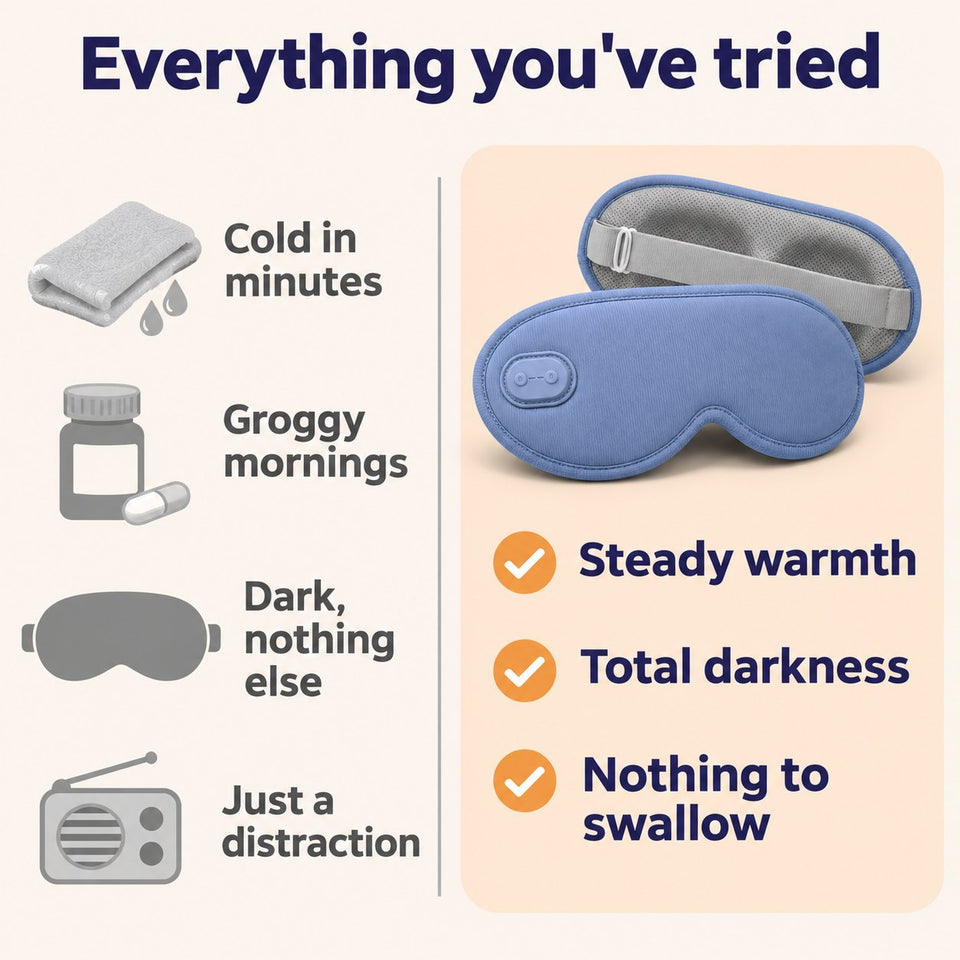
- The radio, audiobooks or a podcast. They make the dark hours pass a little faster, but they don't put you back to sleep.
- Getting up. Making coffee at four thirty and doing the crossword under a lamp is sensible advice, but it also means your day now starts at four thirty.
- Melatonin, magnesium or herbal tea. Some people find them mildly calming, but a cup of tea at nine often means a trip to the bathroom at three.
- Over-the-counter sleep aids. Many rely on a sedating antihistamine, a drug family the American Geriatrics Society advises older adults to avoid, and plenty of people find the grogginess is still with them at breakfast.
- Blackout curtains or a plain eye mask. Darkness helps a light sleeper, but in November it's already pitch black at four, and you're still wide awake.
Every one of these is either a distraction or a sedative. Not one of them addresses the reason your body woke up in the first place.
The half-degree discovery

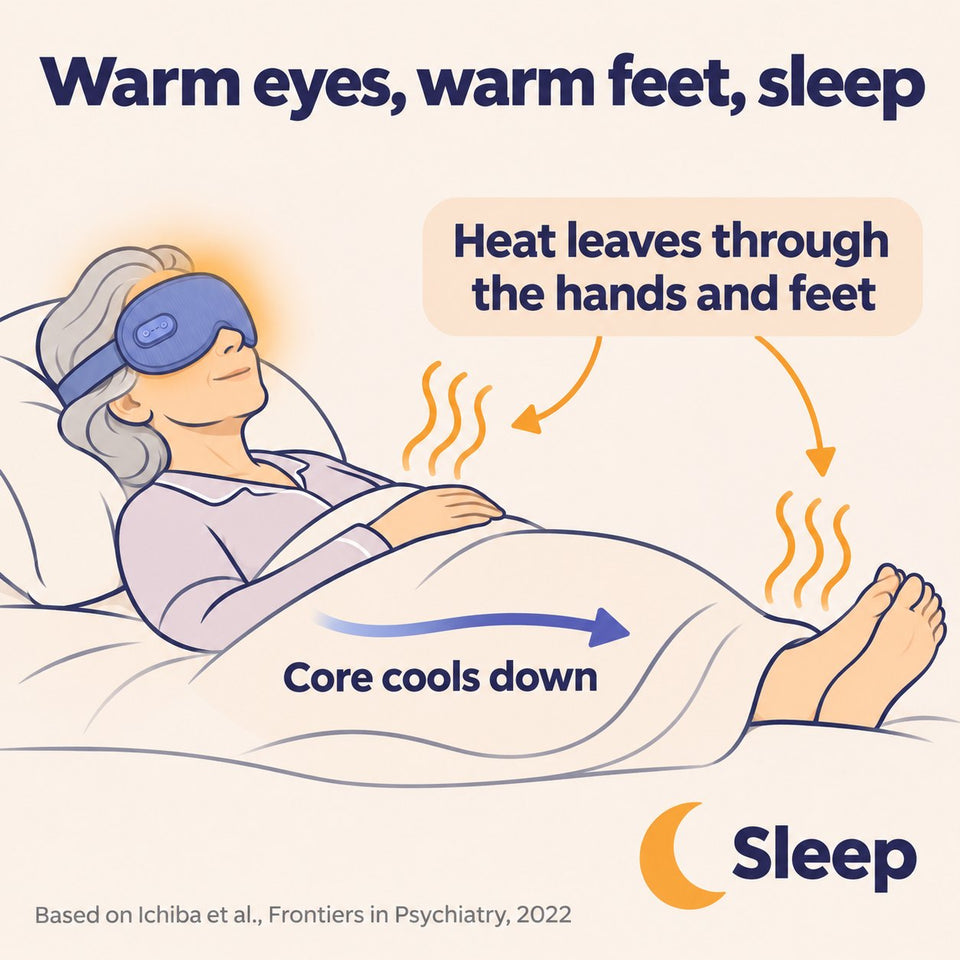
In 2008, a team at the Netherlands Institute for Neuroscience in Amsterdam published a study in Brain, one of the world's most respected neurology journals. They wanted to know whether the temperature of the skin, rather than the body as a whole, influenced how deeply people sleep, so they used a warming suit to raise their volunteers' skin temperature by just 0.4°C, less than half a degree and too little to feel as heat, while their core temperature remained entirely unchanged.
The strongest effect appeared in the older volunteers, including older people with insomnia. Their deep sleep nearly doubled, and their chance of waking too early in the morning fell from 58% to 4%.
The study revealed something you're rarely told when you ask about sleep: the body's sleep switch responds to warmth on the skin, and older bodies respond to it most strongly of all.
Why a warm washcloth never quite worked

You may have stumbled onto this idea yourself. A warm washcloth laid over your eyes at night feels instinctively right: your shoulders drop and something in you lets go. A couple of minutes later, though, it's cold and damp against your face, and you're more awake than when you started.
In a laboratory test, a washcloth soaked in hot tap water stayed properly warm for only about three minutes, and a heating pad simply can't go on your face. What your body was asking for was never the difficulty; keeping the warmth there was.
A mask built around warmth, not just darkness

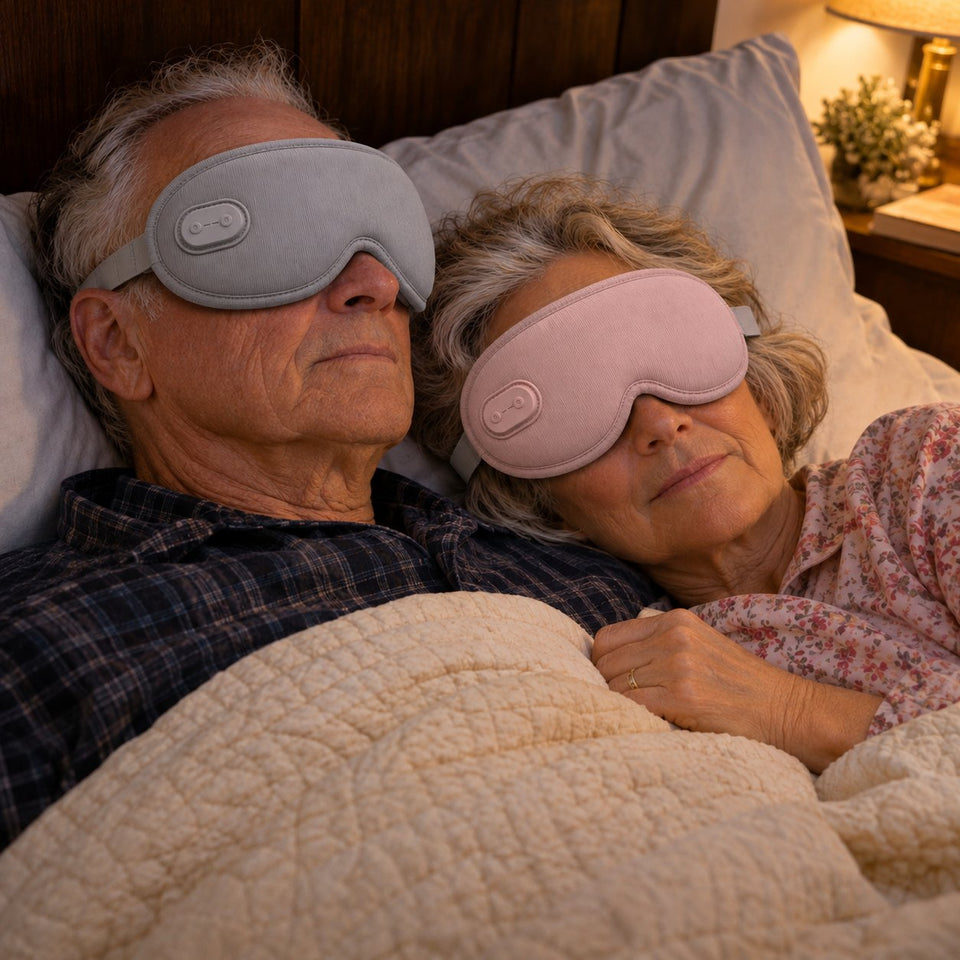
This is the Quietvana Heated Sleep Mask. It looks like an ordinary sleep mask, but inside, a heating layer spreads warmth evenly across both eyes and holds it at a constant temperature, rather than starting hot and fading the way a washcloth does.
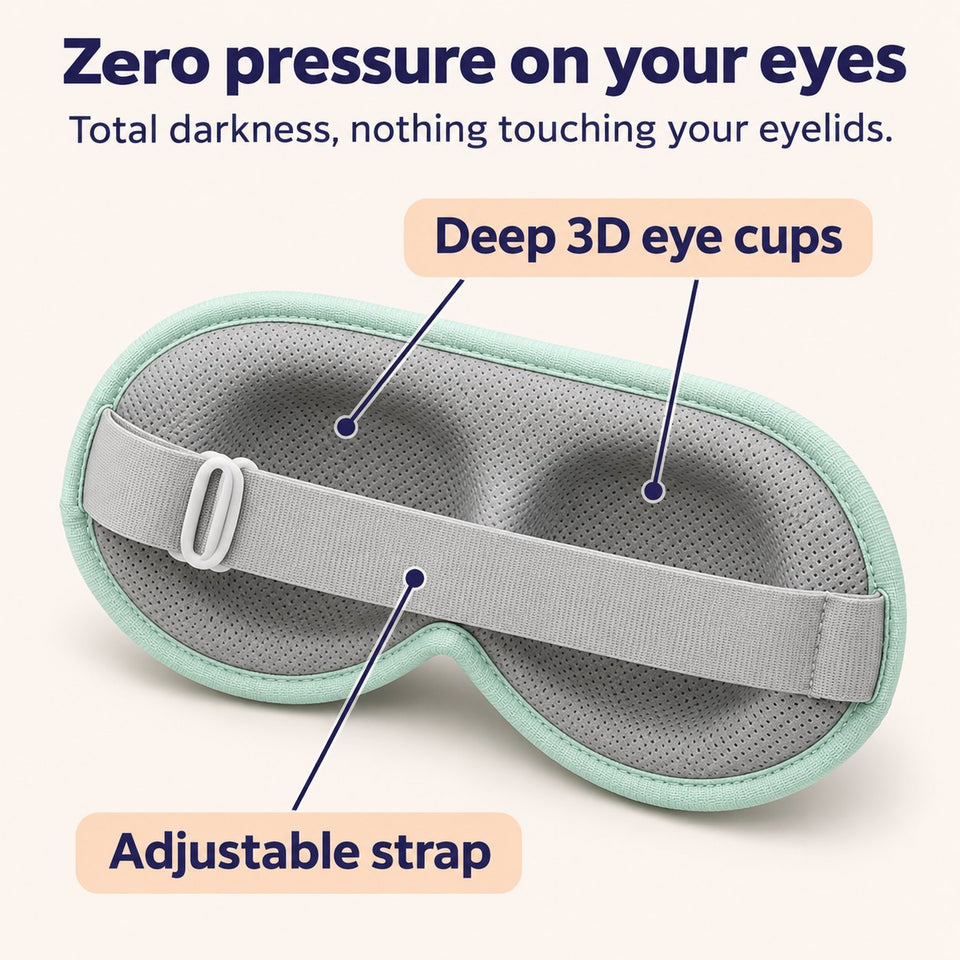
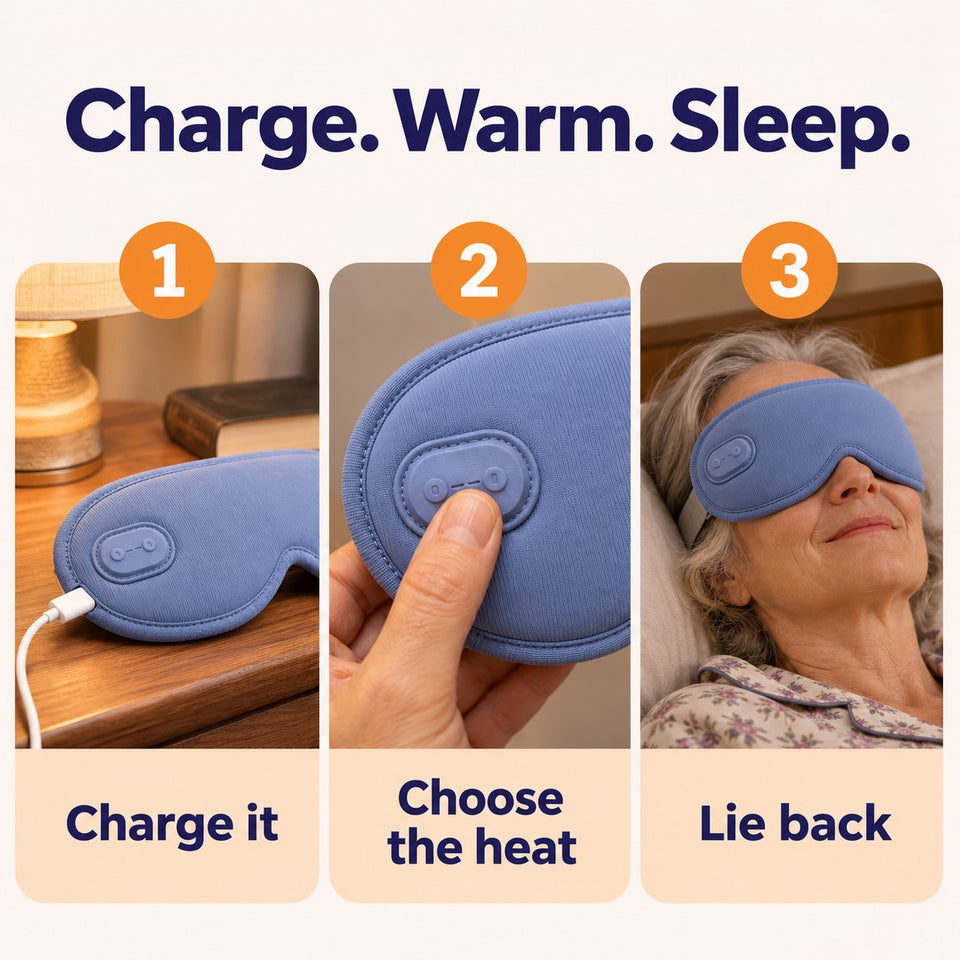
Deep 3D eye cups sit away from your eyelids, so there's no pressure on your eyes, and they block out every trace of light. A slow massage on the brow and cheekbones offers five modes, or you can switch it off and keep only the warmth. And because there's no cord, nothing tangles or trails across the bed: it charges by USB-C, gives one to two hours of warmth per charge and weighs just 80 grams. You choose the warmth that suits the moment:
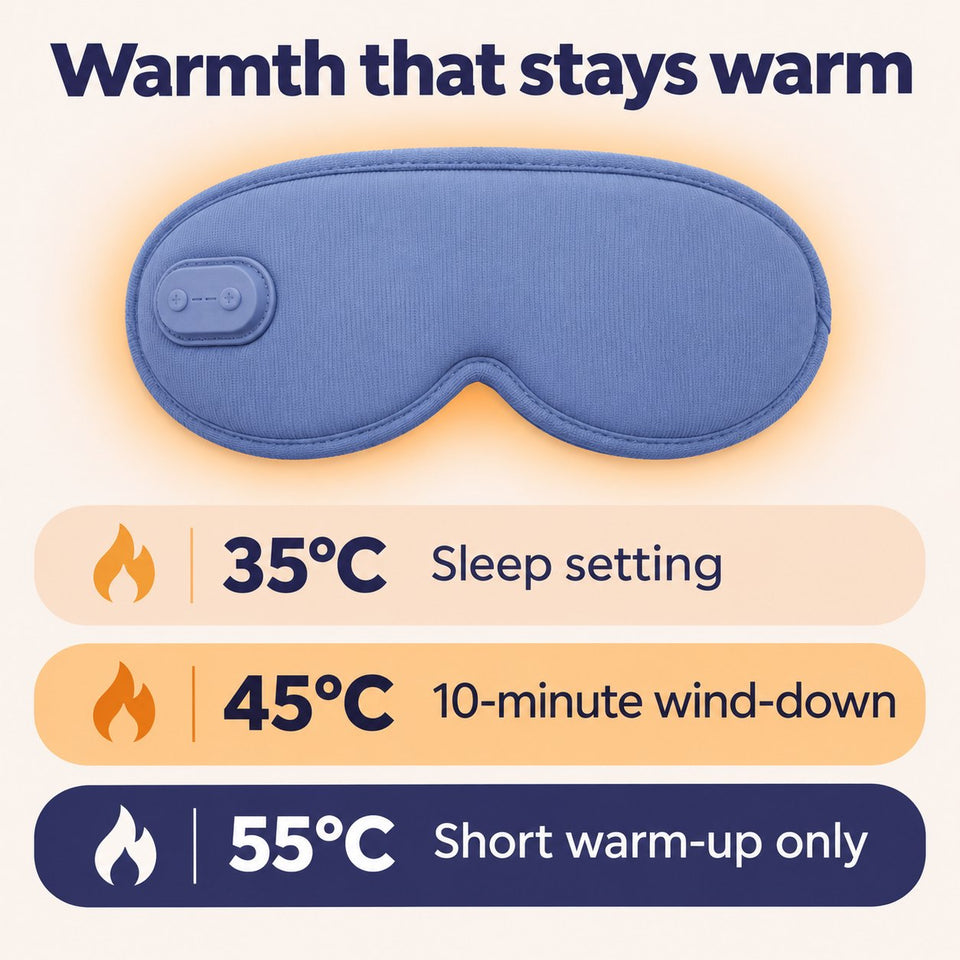
- 35°C (95°F) is the sleep setting. It's gentle and close to your own skin temperature, which is the point: the research raised skin temperature by less than half a degree, so what you need isn't heat but warmth that stays.
- 45°C (113°F) is the wind-down setting, for the first ten minutes while you're still awake, before you switch back to 35.
- 55°C (131°F) is only for a brief warm-up while you're sitting up. Never fall asleep on it.


Quietvana Heated Sleep Mask
If you wake at four and can't get back to sleep, this mask surrounds your eyes with steady warmth, total darkness and a slow, gentle massage, all in a design comfortable enough to sleep in. There are no pills to take and no cord to untangle in the dark.
- Warmth that stays warm: 3 constant levels, not a flannel that's cold in minutes
- Total darkness, no pressure: deep 3D eye cups sit off your eyelids
- A slow massage: 5 gentle modes on the brow and cheekbones, or warmth only
- No cord at 4 a.m.: rechargeable, USB-C, 80 grams
The warmth researchers studiedGentle skin warming has been studied for deeper sleep in older adults, and this mask holds that warmth steady for as long as you need it.
- Free shipping on the Pair
- 60 nights to try it
- Secure checkout
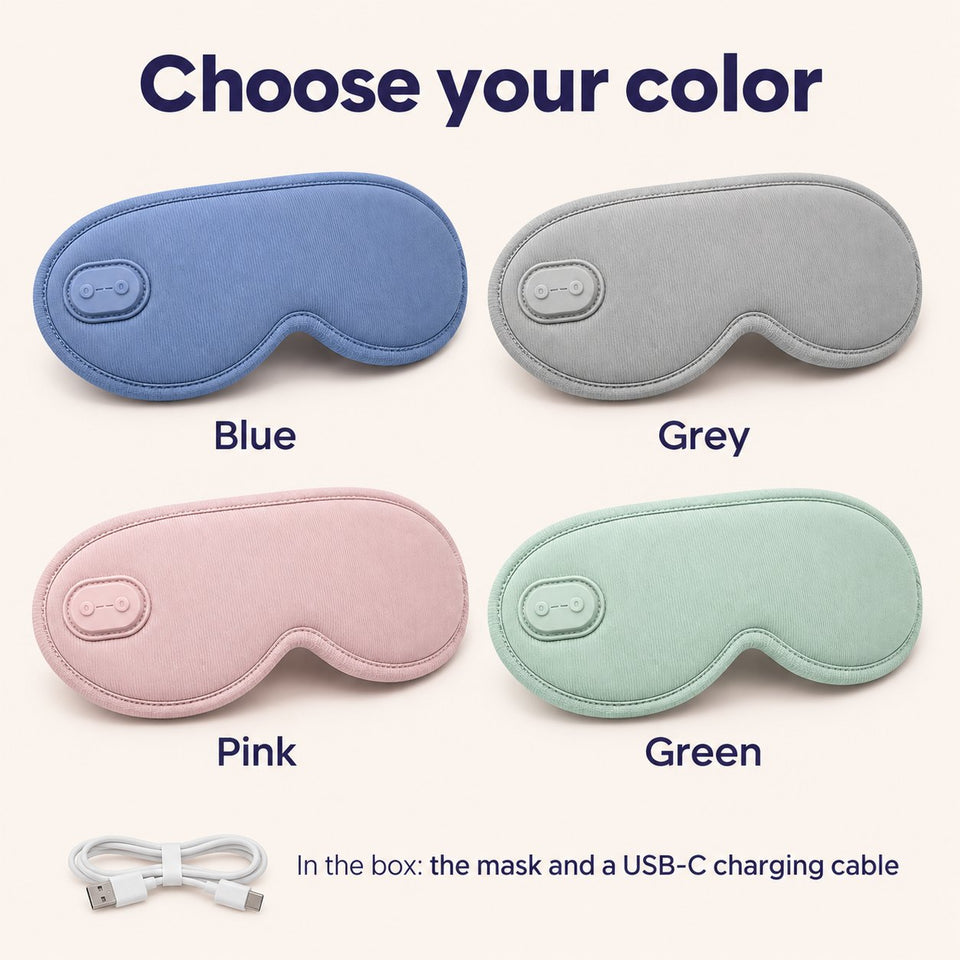
In the box
- Quietvana Heated Sleep Mask
- USB-C charging cable
- Instructions
Before you order
Which heat setting do I sleep on?
Is it safe to use?
I've tried eye masks. What's different?
What if it isn't for me?
Only sold here. Not on Amazon, eBay, Etsy or any other platform.
P.S. At around four tomorrow morning, you'll probably be awake again. Before you reach for the lamp, consider the numbers: five hours a night, 900 hours a year, and what that shortfall is associated with for your memory, your heart and your balance. Then remember the half degree, because it's a remarkably small thing to stand between you and a full night's sleep.
Questions readers ask
Will it actually help me?
We can't promise how your nights will go, and we won't pretend to. What we can tell you is exactly what it does: it puts steady, gentle warmth around your eyes in total darkness, the kind of warmth sleep researchers found older bodies respond to most. That's what the sleep trial is for, and if it doesn't help, you get your money back.
Can I keep taking my usual medications?
This isn't a medicine and doesn't replace one, so never stop or change anything your doctor has prescribed without talking to them first. If you take anything that makes you very drowsy, use only the lowest setting.
How long does shipping take?
Every order travels by tracked US shipping and typically arrives within 3 to 5 business days. Shipping costs $3.95 on a single mask and is completely free on the Pair, and you'll receive a tracking link by email as soon as your order is dispatched.

The 60-Night Sleep Trial.
Use it every night for up to 60 nights, and if you aren't sleeping better, contact us for a full refund. You won't need to explain why.
- Used is fine
- 60 nights from delivery
- A real person answers